.webp) topgamepickh5.com
topgamepickh5.comTeam Fortress 2: A Complete Guide to Gameplay, Classes, Features, Pros and Cons
Introduction to Team Fortress 2
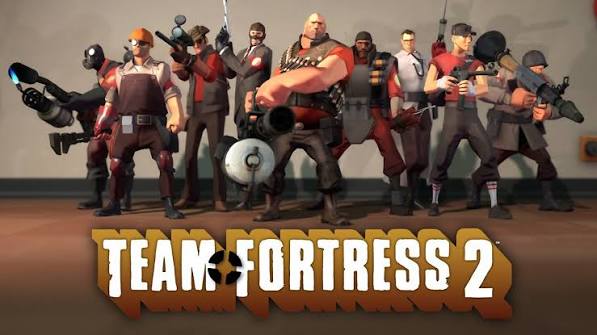
Team Fortress 2 is one of the most recognizable multiplayer first-person shooter games ever created. Developed by Valve and released in 2007, the game has maintained a dedicated community thanks to its distinctive cartoon-inspired art style, humorous characters, team-based combat, and deep tactical gameplay. Unlike many modern shooters that focus heavily on realistic graphics and serious military themes, Team Fortress 2 delivers a colorful and entertaining experience where teamwork, creativity, and individual skill are equally important.
The game takes place in a fictional conflict between two rival organizations, Reliable Excavation & Demolition (RED) and Builders League United (BLU). Players join one of these teams and compete in different objective-based game modes. Each team consists of players using unique character classes, each with specialized weapons, abilities, strengths, and weaknesses.
One of the most appealing aspects of Team Fortress 2 is its accessible yet challenging gameplay. Beginners can quickly understand the basic controls, but mastering advanced movement, weapon mechanics, positioning, and team coordination requires considerable practice. The game also features a large collection of cosmetic items, unusual weapons, community-created maps, and memorable voice lines that contribute to its long-lasting popularity.
Whether you are interested in competitive shooting, casual multiplayer matches, collecting cosmetics, or simply enjoying a funny and chaotic online game, Team Fortress 2 offers an experience that remains distinctive within the first-person shooter genre.
What Is Team Fortress 2?
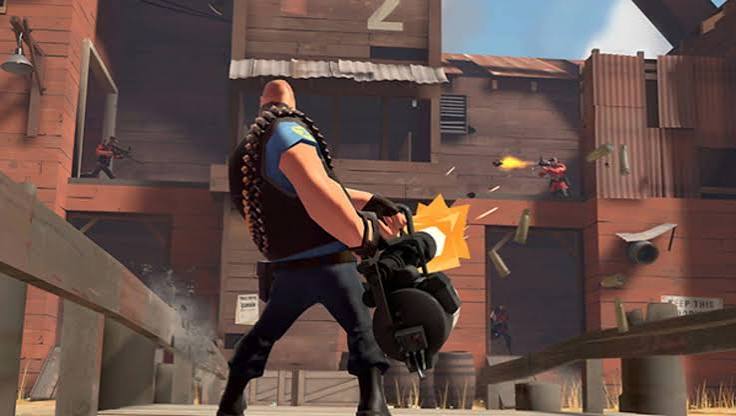
Team Fortress 2 is a free-to-play multiplayer first-person shooter available primarily on PC through Steam. It is the sequel to the original Team Fortress, which began as a team-based modification for Quake before evolving into a well-known franchise.
The central concept of Team Fortress 2 is class-based combat. Instead of giving every player the same equipment and abilities, the game offers nine distinct classes. Each class serves a particular role, from dealing damage and defending objectives to healing teammates and constructing defensive buildings.
This design encourages players to cooperate rather than rely entirely on individual performance. A skilled Sniper can eliminate dangerous opponents from a distance, but a well-coordinated team may still need a Medic to maintain its health and an Engineer to establish a defensive position. A Soldier can launch powerful rockets, while a Scout can move quickly around the battlefield and capture objectives.
The game includes several official maps and modes, alongside an extensive selection of community-created content. Players can enjoy casual matches, competitive formats, training activities, and specialized community servers.
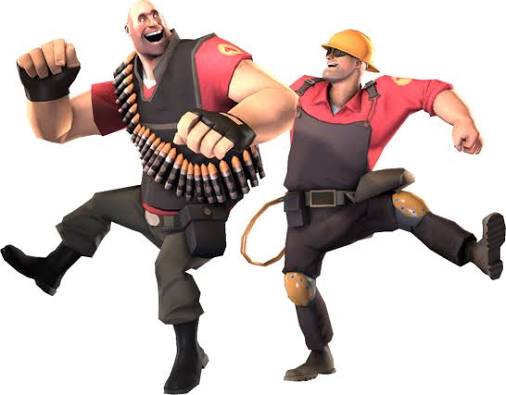
Another defining feature is the game's personality. Its characters have exaggerated personalities, recognizable accents, entertaining animations, and humorous interactions. This combination of competitive mechanics and comedy makes Team Fortress 2 different from more serious shooters.
The History and Development of Team Fortress 2
Team Fortress 2 was developed by Valve and officially released in October 2007 as part of The Orange Box collection. The release included other major titles, but Team Fortress 2 quickly established its own identity through its unique visual presentation and team-based mechanics.
The game was originally envisioned with a more realistic military appearance. However, during development, Valve changed direction and adopted a stylized art design inspired by mid-century commercial illustration. This approach helped make characters, weapons, and combat situations easier to recognize during intense battles.
The final design also emphasized clear silhouettes, distinctive team colors, and readable character animations. These visual choices were not simply decorative. They helped players identify enemy classes and understand what was happening on the battlefield.
After launch, Valve continued to expand the game through updates that introduced new weapons, maps, achievements, cosmetic items, and gameplay adjustments. The introduction of hats and other collectible items became a major part of the game's culture. Trading also developed into a significant community activity.
Team Fortress 2 eventually transitioned to a free-to-play model in 2011. This decision made the game more accessible and helped attract a broader player base. Although the frequency and nature of major official updates have changed over the years, its established mechanics, community servers, and player-created content have helped preserve its appeal.
The game's longevity demonstrates how strong gameplay fundamentals and a recognizable artistic identity can remain attractive long after a game's original release.
Gameplay Mechanics and Core Features
The gameplay of Team Fortress 2 revolves around completing objectives while preventing the opposing team from achieving theirs. Eliminating enemies is important, but it is not always the primary path to victory.
Players must learn how to use their class effectively, understand map layouts, manage ammunition, and cooperate with teammates. Different situations demand different strategies, so switching classes during a match can be an important decision.
For example, a team struggling to break through a heavily defended area might benefit from a Demoman who can deal explosive damage, a Medic who supports an attacking group, or a Spy who infiltrates enemy positions. Meanwhile, a team defending an objective may need Engineers, Heavies, or Pyros to control important routes.
Movement is another major part of the experience. Some classes have special movement techniques that allow experienced players to navigate maps more efficiently. Rocket jumping with the Soldier and explosive jumping with the Demoman can help players reach unusual positions, escape danger, or launch surprise attacks.
Weapon selection also influences play style. Many weapons are alternatives rather than straightforward upgrades, meaning that choosing one usually involves a trade-off. A weapon may provide greater damage in a specific situation while sacrificing reliability, ammunition capacity, or effectiveness at other ranges.
This combination of class roles, movement mechanics, and situational weapon choices creates a system with substantial strategic depth.
The Nine Playable Classes in Team Fortress 2
One of the most important features of Team Fortress 2 is its nine playable classes. Each character contributes something different to the team, and understanding their roles is essential for improving your performance.
1. Scout
The Scout is a fast and agile class designed for mobility, close-range combat, and objective control. His double jump allows him to navigate obstacles and avoid incoming attacks more effectively than most other classes.
The Scout is particularly effective at capturing objectives quickly, flanking enemies, and attacking isolated opponents. His speed makes him difficult to track, especially when controlled by an experienced player.
However, the Scout has relatively low health and can be eliminated quickly if caught in a vulnerable position. Successful Scout players must learn how to use movement, timing, and map knowledge to avoid unnecessary damage.
Best role: Flanking, capturing objectives, and eliminating vulnerable targets.
2. Soldier
The Soldier is one of the most versatile classes in Team Fortress 2. His rocket launcher provides strong damage and area control, making him effective in both offensive and defensive situations.
Soldiers can use rocket jumping to reach elevated locations, cross gaps, and launch unexpected attacks. This movement technique has become a defining part of advanced gameplay.
The Soldier is relatively forgiving for beginners because his rockets can damage multiple enemies and do not require perfectly precise direct hits to be useful. Nevertheless, skilled players must understand projectile speed, splash damage, ammunition management, and movement.
Best role: Frontline combat, area damage, and supporting team pushes.
3. Pyro
The Pyro specializes in close-range combat using a flamethrower. Fire damage can pressure enemies, reveal disguised Spies through flames and afterburn, and help control narrow corridors.
One of the Pyro's most valuable abilities is airblasting with compatible flamethrowers. This technique can reflect certain projectiles, extinguish burning teammates, and push enemies away. Effective airblasting can disrupt enemy attacks and protect important team members.
The Pyro is especially useful in confined spaces, although approaching enemies across open ground can be dangerous. Players must learn when to attack directly and when to protect teammates.
Best role: Close-range pressure, projectile reflection, and Spy checking.
4. Demoman
The Demoman is an explosive specialist who uses weapons such as grenade launchers and sticky bomb launchers. His explosives can deal substantial damage, control entrances, and pressure groups of enemies.
Sticky bombs are particularly useful for defending objectives or setting traps. Players can place explosives near important routes and detonate them when opponents approach.
The Demoman has a high skill ceiling because effective play requires understanding projectile trajectories, detonation timing, and enemy movement. Experienced players can also use explosive jumping to access unusual positions.
Best role: Area denial, explosive damage, and breaking defensive lines.
5. Heavy
The Heavy is a powerful frontline fighter with a large health pool and a minigun capable of delivering sustained damage. He excels at holding important positions and defending teammates from approaching enemies.
However, the Heavy moves relatively slowly, particularly while firing his minigun. This makes him vulnerable to Snipers, Spies, and enemies who attack from unexpected angles.
The Heavy becomes significantly more effective when supported by a Medic. Healing allows him to remain in combat longer and maintain pressure on enemy positions.
Best role: Frontline defense, sustained damage, and protecting key areas.
6. Engineer
The Engineer focuses on constructing buildings that support the team. His signature structures include the Sentry Gun, Dispenser, and Teleporter.
Sentry Guns automatically attack enemies within their effective range. Dispensers provide health, ammunition, and metal to nearby teammates. Teleporters help players return to the battlefield more quickly, making them especially valuable on maps with long travel distances.
The Engineer must balance building placement, resource management, and personal safety. Poorly positioned buildings can be destroyed quickly, while a well-established defensive network can make an objective difficult to capture.
Best role: Defensive construction, team support, and controlling important routes.
7. Medic
The Medic is the primary healing class in Team Fortress 2. His Medi Gun restores teammates' health and can build an ÜberCharge, which provides a powerful temporary advantage depending on the equipped Medi Gun.
The Medic is often one of the most strategically important players on a team. A well-timed ÜberCharge can help allies survive enemy defenses and push through a difficult position.
However, Medics are vulnerable when isolated and should maintain awareness of nearby threats. Good positioning, target selection, and communication are essential for survival.
Best role: Healing, sustaining teammates, and enabling coordinated attacks.
8. Sniper
The Sniper specializes in long-range combat using rifles that can deliver high damage with accurate shots. Fully charged headshots are especially dangerous, allowing skilled Snipers to eliminate important targets before they can react.
Snipers can pressure enemy Medics, punish exposed players, and control long sightlines. Their effectiveness depends heavily on map knowledge, aim, patience, and awareness of enemy movement.
However, Snipers are vulnerable at close range and can be countered by flanking classes or opposing Snipers. Choosing safe firing positions and relocating when necessary are important skills.
Best role: Long-range elimination and controlling open sightlines.
9. Spy
The Spy is an infiltration specialist who can disguise himself as members of the opposing team and become invisible using his cloaking abilities. His signature weapon, the knife, can instantly eliminate an enemy with a successful backstab under the appropriate conditions.
Spies are particularly dangerous to isolated players and defensive structures. They can use their disguise and cloak to infiltrate enemy positions, identify valuable targets, and disrupt established defenses.
However, the Spy requires patience and careful timing. Experienced opponents watch for suspicious behavior, check teammates for enemy Spies, and use environmental clues to identify infiltrators.
Best role: Infiltration, eliminating high-value targets, and disrupting defenses.
Popular Game Modes in Team Fortress 2
Team Fortress 2 includes several objective-based game modes, each encouraging different strategies and team compositions.
Capture the Flag
In Capture the Flag, each team attempts to steal the opposing team's intelligence briefcase and return it to its own base. Players must defend their intelligence while finding opportunities to infiltrate enemy territory.
This mode rewards a balance between offense and defense. Fast classes can pursue objectives, while defensive classes protect the base and prevent enemy escapes.
Control Points
Control Point maps require teams to capture and defend designated areas. Depending on the map, teams may need to secure several points in sequence or compete for a central control point.
Control Point gameplay encourages coordinated pushes, defensive positioning, and timely class changes. A team that controls important routes can gain a substantial advantage.
Payload
In Payload, the attacking team must escort an explosive cart along a track toward the enemy's base. The defending team attempts to stop its progress before time expires.
The cart moves when attackers remain near it, so teamwork and positioning are critical. Engineers can create defensive positions, while Soldiers, Demomen, and Medics can help attackers break through resistance.
King of the Hill
King of the Hill centers on a single control point. Each team attempts to capture and hold the point until its timer reaches zero.
The mode produces frequent fights because both teams must contest the same area. Players must balance aggressive attacks with the need to remain close enough to maintain control.
Arena and Other Community Modes
Arena focuses on smaller-scale battles in which players have limited opportunities to respawn during a round. It rewards survival, positioning, and careful coordination.
Community servers also offer additional experiences, including surfing, jump maps, deathruns, unusual objective modes, and specialized competitive formats. These activities add variety beyond the standard official game modes.
Weapons, Cosmetics, and the Item System
Weapons are a central part of Team Fortress 2's customization and gameplay systems. Each class has access to different weapon slots, and alternative weapons can change how a character performs.
Some weapons favor direct damage, while others provide mobility, defensive utility, or specialized tactical advantages. Players unlock certain items through gameplay, achievements, crafting, or other item-system features.
The game also includes cosmetic items such as hats, unusual effects, clothing, and weapon decorations. These items allow players to customize their characters without necessarily changing their core combat abilities.
Trading became a major aspect of the community, with some rare cosmetics and unusual items attracting considerable interest among collectors. However, item prices and availability can fluctuate, and players should exercise caution when trading with strangers.
It is important to distinguish between gameplay equipment and cosmetics. Cosmetic customization is primarily about personal expression, whereas weapon selection can directly influence combat strategy.
For new players, experimenting with available equipment is generally more useful than focusing immediately on collecting rare items.
Graphics, Sound Design, and Humor
Team Fortress 2 uses a stylized visual design that remains recognizable even when compared with newer games. Its exaggerated character proportions, bright team colors, expressive animations, and distinctive environments help communicate gameplay information quickly.
The art style also gives the game a timeless quality. Rather than pursuing photorealism, Valve created a fictional world with a consistent visual identity inspired by commercial illustration and classic action-comedy aesthetics.
Sound design is equally important. Weapon effects help players identify attacks, while footsteps, explosions, and voice lines provide information about nearby combat. Each class has a distinctive personality expressed through dialogue and animations.
Humor is one of the game's strongest features. Characters frequently make sarcastic remarks, celebrate victories, or react dramatically to unexpected events. These interactions help make even chaotic matches entertaining.
The combination of visual clarity, recognizable sounds, and comedy creates a game world that is memorable beyond its shooting mechanics.
Multiplayer Community and Competitive Gameplay
The Team Fortress 2 community has played a major role in keeping the game active over many years. Community servers, fan-made maps, custom game modes, videos, tournaments, and trading communities provide players with many ways to participate.
Casual matches are suitable for players who want to enjoy the game without committing to organized competition. These matches often feature a mixture of experienced players, newcomers, unusual strategies, and unpredictable team fights.
Competitive Team Fortress 2 generally emphasizes stronger coordination, communication, and specialized team compositions. Depending on the format, teams may use restrictions on player numbers, classes, or equipment to create a more structured environment.
Competitive play rewards understanding of map control, healing priorities, movement, and coordinated attacks. Players who want to improve should learn from experienced teammates, review their mistakes, and practice specific skills instead of trying to master everything at once.
Community servers can also provide a different atmosphere from standard matchmaking. Some focus on serious gameplay, while others prioritize humor, custom content, or social interaction.
Nevertheless, the community experience can vary significantly between servers. New players may encounter friendly groups as well as highly competitive environments, so choosing servers that match their preferences can make learning more enjoyable.
Tips for Beginners Playing Team Fortress 2
Starting Team Fortress 2 can feel overwhelming because the game offers nine classes, many weapons, and years of accumulated player knowledge. Fortunately, beginners can improve quickly by focusing on a few fundamentals.
- Start with a small number of classes. Try Soldier, Heavy, or Medic to learn the basics of combat and team support before exploring more demanding classes.
- Play the objective. Eliminating enemies is useful, but capturing control points, escorting Payload carts, and protecting important areas are what win matches.
- Learn the maps. Understand where health packs, ammunition, chokepoints, flanking routes, and defensive positions are located.
- Watch your surroundings. Do not focus exclusively on enemies directly ahead. Pay attention to Sniper sightlines, possible Spy attacks, and threats approaching from behind.
- Work with teammates. Healing, protecting a Medic, supporting an Engineer, or coordinating an attack can have more impact than pursuing individual eliminations.
- Use cover and health packs. Avoid remaining exposed when your health is low. Learning when to retreat is an important skill.
- Experiment with weapons. Different weapons perform better in different situations. Test alternatives and learn their strengths and limitations.
- Practice movement. Learn to strafe, jump effectively, and use the environment to avoid damage. Advanced techniques can come later.
- Change classes when necessary. If your current class is ineffective against a particular defense, consider switching to a role that better addresses the problem.
- Stay patient. Experienced players may seem difficult to challenge at first, but consistent practice will improve aim, positioning, and decision-making.
The most effective way to learn is to focus on one improvement at a time. Developing reliable positioning and understanding objectives will often produce better results than attempting advanced techniques immediately.
System Requirements and Platform Availability
Team Fortress 2 is primarily associated with PC gaming and is distributed through Steam. Its relatively modest graphical demands make it accessible to many computers, including some older systems that struggle with modern, resource-intensive shooters.
Exact performance depends on the computer's processor, graphics hardware, memory, operating system, game settings, and the number of effects occurring during a match. Community modifications and custom content may also influence performance.
Before installing the game, players should check its current Steam store listing for supported operating systems and the latest official system requirements. Platform support and compatibility can change over time, especially as operating systems receive updates.
Team Fortress 2 is not officially a native mobile game. Websites advertising unofficial mobile APK downloads should be treated carefully because they may offer unsafe files, misleading versions, or software that does not provide the authentic PC experience.
For the standard game, the official Steam distribution channel is the most reliable starting point. Players should also be cautious about third-party launchers and websites that request account credentials or promise unusual rewards.
Overall, the advantages of Team Fortress 2 outweigh its disadvantages for players who enjoy class-based multiplayer combat. However, those who prefer highly structured matchmaking, frequent large-scale updates, or a beginner-only environment may need time to adjust.
Is Team Fortress 2 Still Worth Playing?
Team Fortress 2 remains worth considering for players who enjoy team-based shooters with distinctive characters and substantial gameplay depth. Its strongest qualities are not dependent on cutting-edge graphics or constant content releases. Instead, the game's appeal comes from its class design, movement mechanics, objective-based combat, and the many strategies that emerge when different roles work together.
New players can begin with casual matches and gradually explore more advanced mechanics. Someone who enjoys supporting teammates may prefer Medic or Engineer, while players who favor aggressive combat might choose Soldier, Scout, or Demoman. Those interested in deception and precision can experiment with Spy and Sniper.
The game is also appealing to people who enjoy watching gameplay videos, learning advanced techniques, collecting cosmetics, or participating in community-created modes. There is a substantial amount to explore beyond the basic shooting experience.
However, prospective players should have realistic expectations. Public matches can be inconsistent, the learning curve can be demanding, and the online environment is not always equally welcoming or well balanced. The quality of an individual session may depend heavily on the server and the players involved.
Despite these limitations, Team Fortress 2 continues to offer something distinctive: a multiplayer shooter where teamwork, personality, strategy, and mechanical skill combine in a memorable way.
Team Fortress 2 Rating
The following rating is an editorial assessment of the game's core experience rather than an official score or a live player-review average.
CategoryRatingGameplay9.5/10Class variety9.5/10Art style9.0/10Sound design and humor9.5/10Replayability9.0/10Beginner friendliness7.0/10Match consistency6.5/10Customization9.0/10Overall rating9.0/10
Overall score: 9/10
Team Fortress 2 earns a strong overall rating because of its distinctive identity, flexible class system, entertaining combat, and enduring community. Its older technical foundation and occasional problems with public matches prevent it from being a perfect experience, but the quality of its core gameplay remains impressive.
Conclusion
Team Fortress 2 is a classic team-based first-person shooter that continues to stand out through its colorful art style, humorous characters, varied weapons, and nine specialized classes. Developed by Valve, the game combines accessible controls with advanced mechanics that reward practice, tactical awareness, and cooperation.
Its variety of game modes gives players multiple ways to compete, while its community-created content extends the experience beyond the standard matches. The Scout offers speed, the Soldier delivers explosive power, the Medic keeps teammates alive, and the Engineer establishes defensive infrastructure. Every class contributes to the larger strategic picture, making teamwork a central part of the experience.
Although Team Fortress 2 has disadvantages, including a learning curve, inconsistent public matches, and occasional online disruption, its strengths remain substantial. Players who appreciate creative multiplayer combat and character-driven humor can find hundreds of hours of entertainment in its maps, classes, and community activities.
For newcomers, the best approach is to start with a few straightforward classes, learn the objectives, communicate with teammates, and gradually explore more advanced techniques. For returning players, the game's familiar mechanics and opportunities for improvement provide reasons to revisit it.